
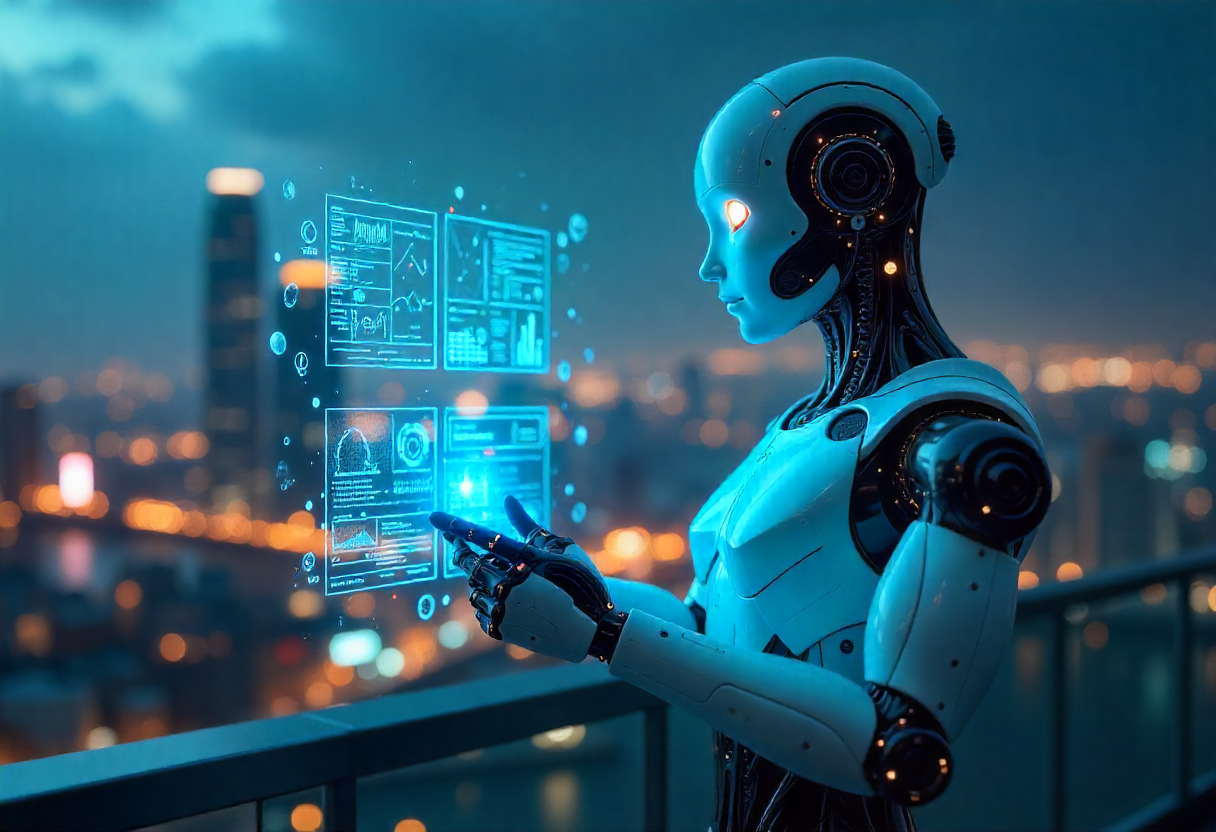
Artificial Intelligence (AI) is no longer just a concept from science fiction — it’s the driving force behind the world’s most significant technological revolution. From automating simple daily tasks to enabling complex decision-making systems, AI is transforming how we live, work, and connect with technology.
At its core, Artificial Intelligence refers to the ability of machines to mimic human intelligence. This includes learning from data, recognizing patterns, making predictions, and continuously improving without explicit programming. Today, AI powers everything from smart assistants like Siri and Alexa to advanced tools that analyze big data, manage supply chains, and even assist doctors in diagnosing diseases.
One of the biggest breakthroughs in AI has been machine learning (ML) — the process that allows computers to learn and adapt from experience. With the availability of massive data sets and increased computing power, ML algorithms have evolved to become more efficient, accurate, and autonomous. Another major branch, deep learning, uses artificial neural networks to simulate how the human brain processes information. This has led to groundbreaking innovations in speech recognition, computer vision, and natural language processing.
AI’s impact is evident across nearly every industry. In healthcare, it assists in early diagnosis, drug discovery, and personalized treatment plans. In finance, AI-driven systems detect fraud, automate trading, and enhance customer service. The automotive industry is pushing boundaries with self-driving cars, while education uses AI-powered platforms to create customized learning experiences for students.
Despite its advantages, AI also raises critical challenges. Ethical concerns such as data privacy, bias in algorithms, and job displacement due to automation are hot topics among researchers and policymakers. Balancing innovation with responsibility will be key to ensuring that AI benefits humanity as a whole.
Looking forward, the future of Artificial Intelligence promises even greater advancements. Emerging fields like generative AI, quantum computing, and AI governance will continue to redefine what’s possible. Businesses and individuals who embrace this technology early will gain a significant competitive edge in the digital era.
AI isn’t replacing human intelligence — it’s amplifying it. As machines handle repetitive tasks, humans can focus on creativity, empathy, and problem-solving — qualities that make us truly irreplaceable.
The rise of Artificial Intelligence marks the beginning of a new technological age — one that’s smarter, faster, and deeply interconnected. Whether you’re a developer, entrepreneur, or simply a curious learner, understanding AI is no longer optional — it’s essential for navigating the future.